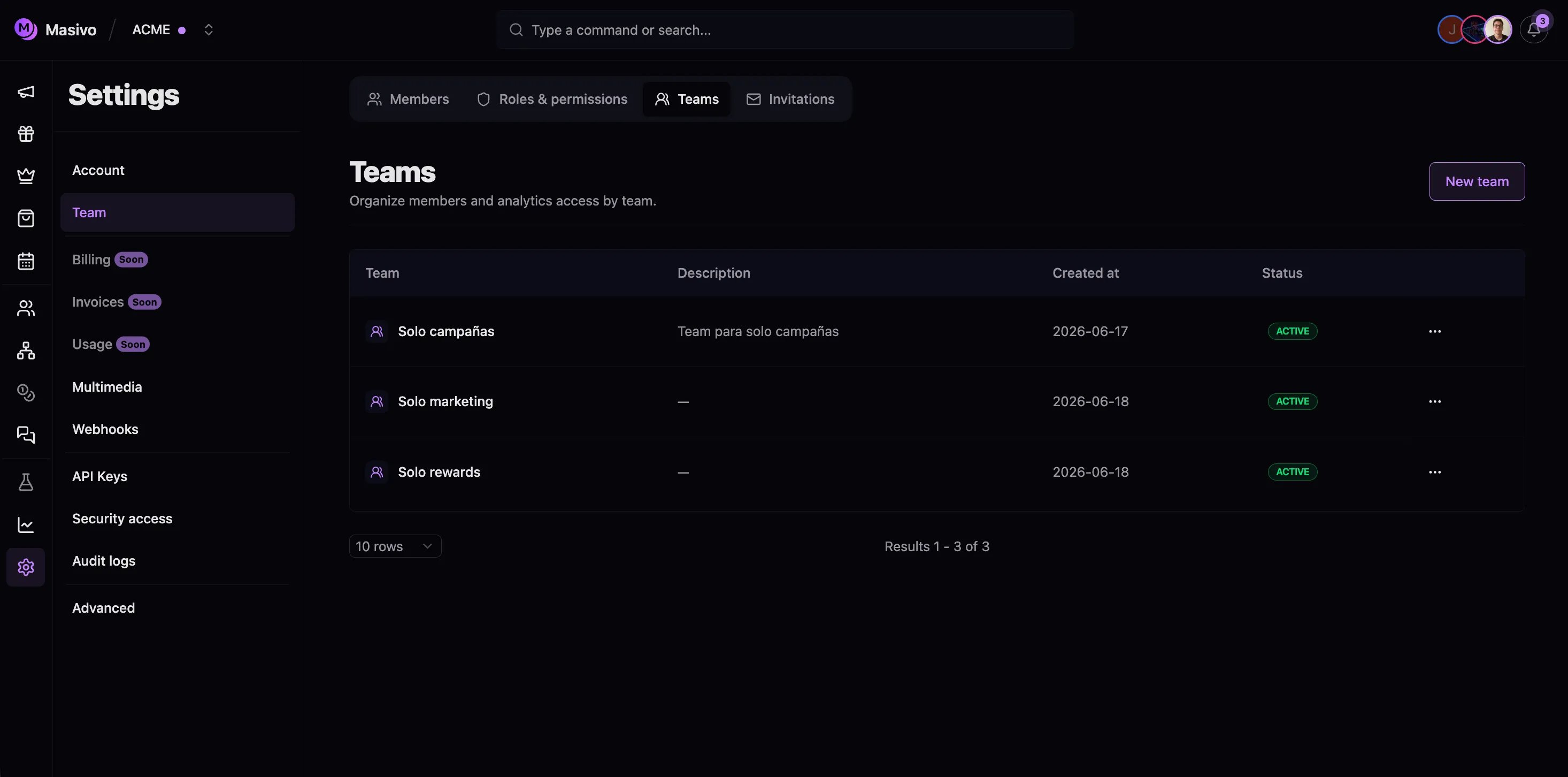
Teams are account-scoped groups that control who sees which resources in the dashboard. They are separate from account membership (users on an account) and from roles (what actions a user can perform).

Teams vs members vs roles

ConceptPurpose
MembersUsers who belong to the account (users_by_accounts)
TeamsOrganizational units for analytics scoping
RolesPermissions (read, write, delete) per resource area
A member can belong to multiple teams. A member with no team assignments (and who is not ADMIN or owner) only sees resources with empty team_ids.

Entity team picker

When creating or editing a resource, use the Teams field to assign visibility:
  • Select one or more teams to restrict analytics to those members.
  • Choose No teams to leave team_ids empty so everyone can see the resource.
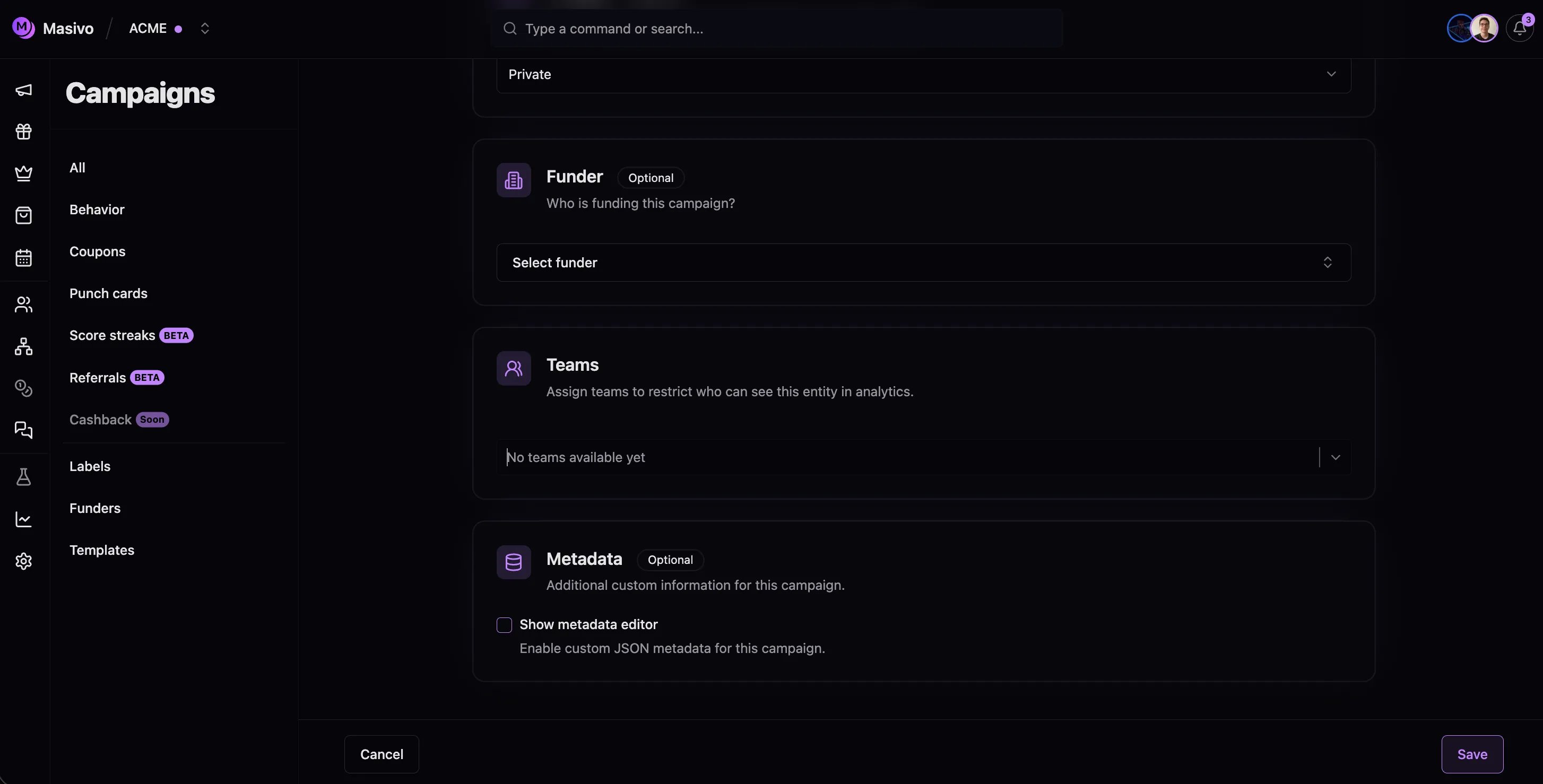
The picker lists only teams the current user belongs to (except ADMIN users, who see all teams).

Dashboard navigation

SectionPathActions
Members/settings/teamInvite, assign roles and teams, remove members
Teams/settings/teamsCreate, edit, view team members
Roles/settings/rolesDefine custom permission sets
Invitations/settings/invitationsTrack pending invites

Permissions

ActionRequirement
View members, teams, invitationsAccount member
Invite memberssettings:write
Create / edit / delete teamssettings:write / settings:delete
Assign member teamssettings:write
Remove memberssettings:delete
The built-in ADMIN role has all permissions. Custom roles define per-resource access across 30+ areas (campaigns, rewards, marketing automation, and more).

Invitations

Member invitations expire after 24 hours. Recipients accept via /auth/accept-invitation?id=… after signing in with the invited email.